Foundation installation
Full perimeter foundation walls with waterproofing and drainage - the natural next step when your project needs a basement or crawl space rather than a slab floor.
Learn more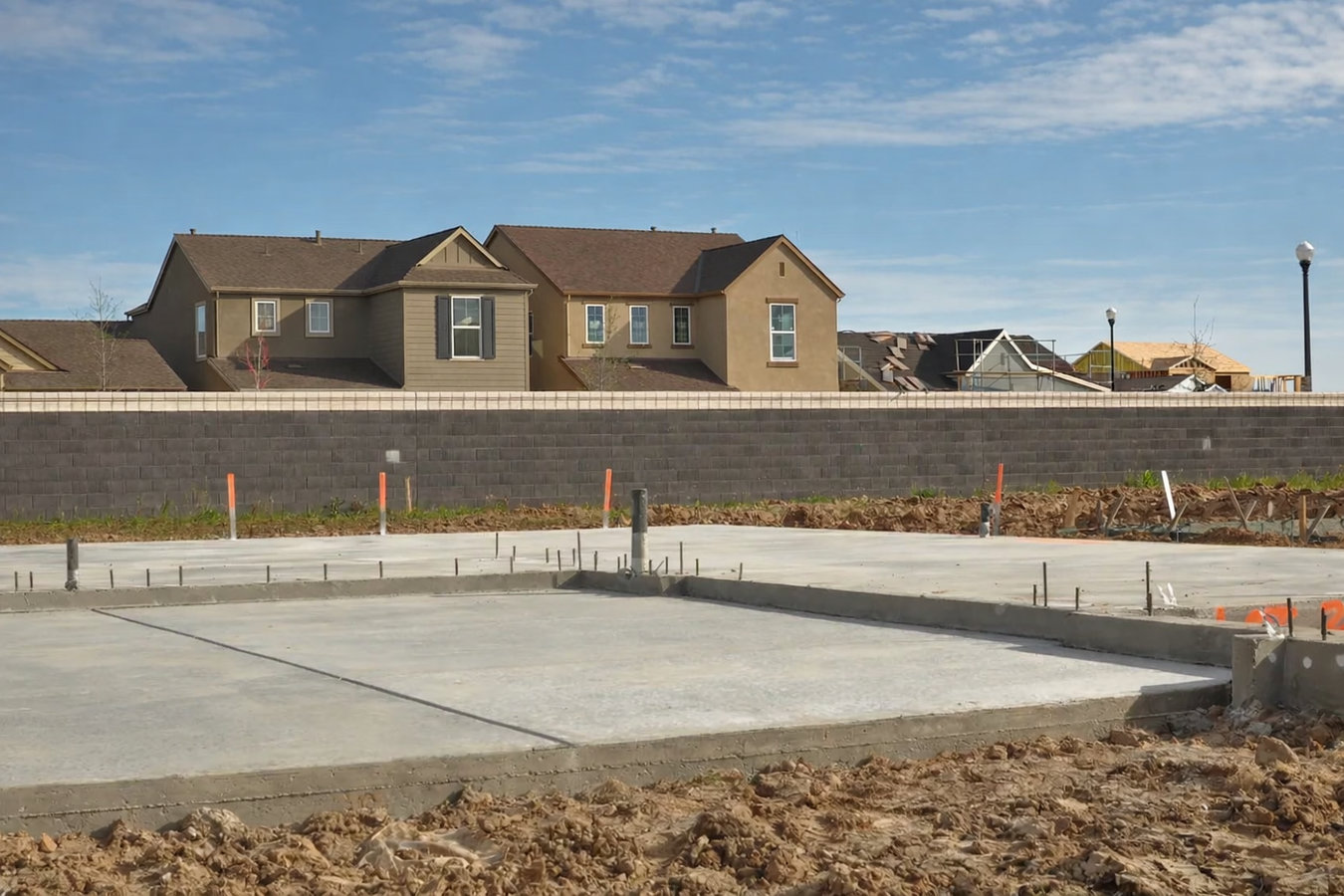
A slab that cracks or heaves after one Hudson Valley winter was built on a bad base. We pour residential slab foundations with frost-depth footings, compacted gravel, and steel reinforcement that lasts.
Slab foundation building in Poughkeepsie means grading and compacting the ground, laying a gravel base and vapor barrier, setting steel-reinforced forms with frost-depth footings, and pouring a flat concrete surface that serves as both floor and structural base - most residential slabs take one to three days of site prep plus a single pour day, with curing time to follow.
Most slab projects in Poughkeepsie are not new construction from scratch - they are additions. A homeowner is building a detached garage, converting a back porch, or adding an accessory dwelling unit, and the slab is the first step before any framing begins. The challenge in this area is soil: Dutchess County has a mix of clay-heavy ground and rocky patches, both of which require careful site preparation to keep the slab stable through decades of freeze-thaw cycles.
Once a slab is in place, many homeowners move on to finishing the space above it. If your project includes concrete steps leading up to the addition or a retaining wall to manage grade changes, our concrete footings service covers the structural base work that supports both.
If a crack you noticed last spring is noticeably wider now, the freeze-thaw cycle is actively breaking the slab apart. In Poughkeepsie, the ground freezes and thaws repeatedly between November and March, and moisture working into existing cracks makes them grow. Sealing hairline cracks is fine; cracks you can fit a coin into usually point to a base problem that patching alone will not fix.
If one part of your slab sits higher or lower than the section next to it, the soil underneath has shifted unevenly. This is common in Dutchess County where clay-heavy soils expand and contract with moisture levels. A raised lip or step between slabs is a trip hazard, and the underlying movement will continue unless the base is corrected.
Concrete should slope slightly away from any structure so water drains off. If you see water sitting against the base of your home or garage after rain, the grade or the slab surface is directing moisture toward the building. Over time that water saturates the soil beneath the slab and accelerates settling and cracking.
If you are adding a garage, sunroom, or accessory structure and there is no floor in place yet, you need a slab before any framing can begin. This is the most straightforward signal - everything else waits on the concrete. Slab-on-grade is often the fastest and most cost-effective base for residential additions in the Hudson Valley.
We build new residential slabs and replace deteriorated existing slabs throughout Poughkeepsie and the Hudson Valley. Every job includes a full site assessment, compacted gravel base, poly vapor barrier, steel reinforcement, and properly designed edge footings that sit below the local frost line. These are not optional extras - they are the difference between a slab that is still level in 20 years and one that is heaving after five winters. We also coordinate with our foundation installation crew when a project calls for full perimeter walls in addition to a slab floor.
For homeowners building heated additions or converting unheated spaces to living area, we include rigid foam insulation beneath the slab - a step that pays back in lower heating bills and also protects against frost heave by keeping the ground temperature more stable. Concrete footings supporting any walls or posts above the slab are handled as part of the same project, so you get one crew, one schedule, and one point of contact from grade work through final inspection. Our concrete footings page has more detail on how we handle the structural base.
Best for garages, sunrooms, and accessory structures being added to an existing Poughkeepsie home.
Best for existing slabs that have cracked, shifted, or been determined to be beyond repair by a contractor assessment.
Best for heated spaces in the Hudson Valley - rigid foam under the slab reduces heat loss and protects against frost heave.
Best for load-bearing applications where extra steel reinforcement is required by design or local code.
Poughkeepsie and Dutchess County have two things that make slab work more demanding than in warmer or drier parts of the country: clay-heavy soil and genuine winters. Clay soil holds water and shifts with moisture levels, putting sustained lateral and vertical pressure on any concrete it surrounds. Frost depth in a hard Poughkeepsie winter can reach three feet or more - which means every slab edge footing needs to be built deep enough that the frozen ground cannot push it upward. A slab built for Georgia conditions will not survive a Hudson Valley winter without cracking.
Much of Poughkeepsie's housing was built between the 1920s and 1970s, and many additions being planned today are the first major expansions these homes have ever had. Tying a new slab into an old structure requires understanding how the two will move differently over time. The Beacon and Newburgh areas also have older housing stock with similar considerations - if your addition project spans municipality lines, we work throughout the region.
We reply within 1 business day. Tell us what the slab is for and the approximate size, and we will schedule a free site visit. A firm phone quote without seeing the soil and access conditions is not reliable - we do not do that.
We walk the site, assess soil conditions, access for concrete trucks, and any drainage concerns. You receive a written estimate that breaks out labor, materials, and site prep separately - no vague lump sums.
We apply for the required permit with the correct jurisdiction - City of Poughkeepsie or Town of Poughkeepsie - before any digging starts. Permit review typically takes a few days to a few weeks. We handle the paperwork.
Site prep takes one to three days - grading, compacting, gravel base, forms, and reinforcement. The pour is usually one day. A city inspector reviews the base before the pour and the finished slab at the end.
Free written estimate. No obligation. We reply within 1 business day.
(845) 404-1132Dutchess County requires footings to extend below the frost line to prevent heave during the hard winters Poughkeepsie gets. Every slab we build includes thickened edge footings at the correct depth - not something we cut to save time.
Clay-heavy Hudson Valley soil is one of the main reasons slabs fail prematurely. We always prepare the ground with a compacted gravel base and polyethylene vapor barrier before the pour - the two steps most short-cut contractors skip.
We complete slab projects throughout Poughkeepsie and surrounding areas. Knowing local soil conditions, permit processes, and seasonal pour windows - from Dutchess County clay to rocky hillside lots - informs every estimate we write.
New York State requires home improvement contractors to register with the Department of State. Our registration is verifiable through the state licensing database, and we carry the liability and workers' compensation coverage the law requires. You can verify this before signing anything.
The American Concrete Institute publishes the standards our crews work to for slab-on-grade construction, and the New York State Department of State is where you can verify our home improvement contractor registration before you sign anything. Every job is permitted, inspected, and fully documented.
Full perimeter foundation walls with waterproofing and drainage - the natural next step when your project needs a basement or crawl space rather than a slab floor.
Learn moreIsolated footings for posts, columns, and load points above a slab - often poured at the same time as the slab itself.
Learn morePoughkeepsie's concrete season runs roughly April through October - spring and summer slots go fast. Call or message now to lock in your project date.